
Walleye Fishing for Beginners: Gear, Techniques, and Where to Catch Them
New to walleye fishing? Learn the gear you need, the easiest techniques, and where to find walleye from shore or a boat, including when they bite best.
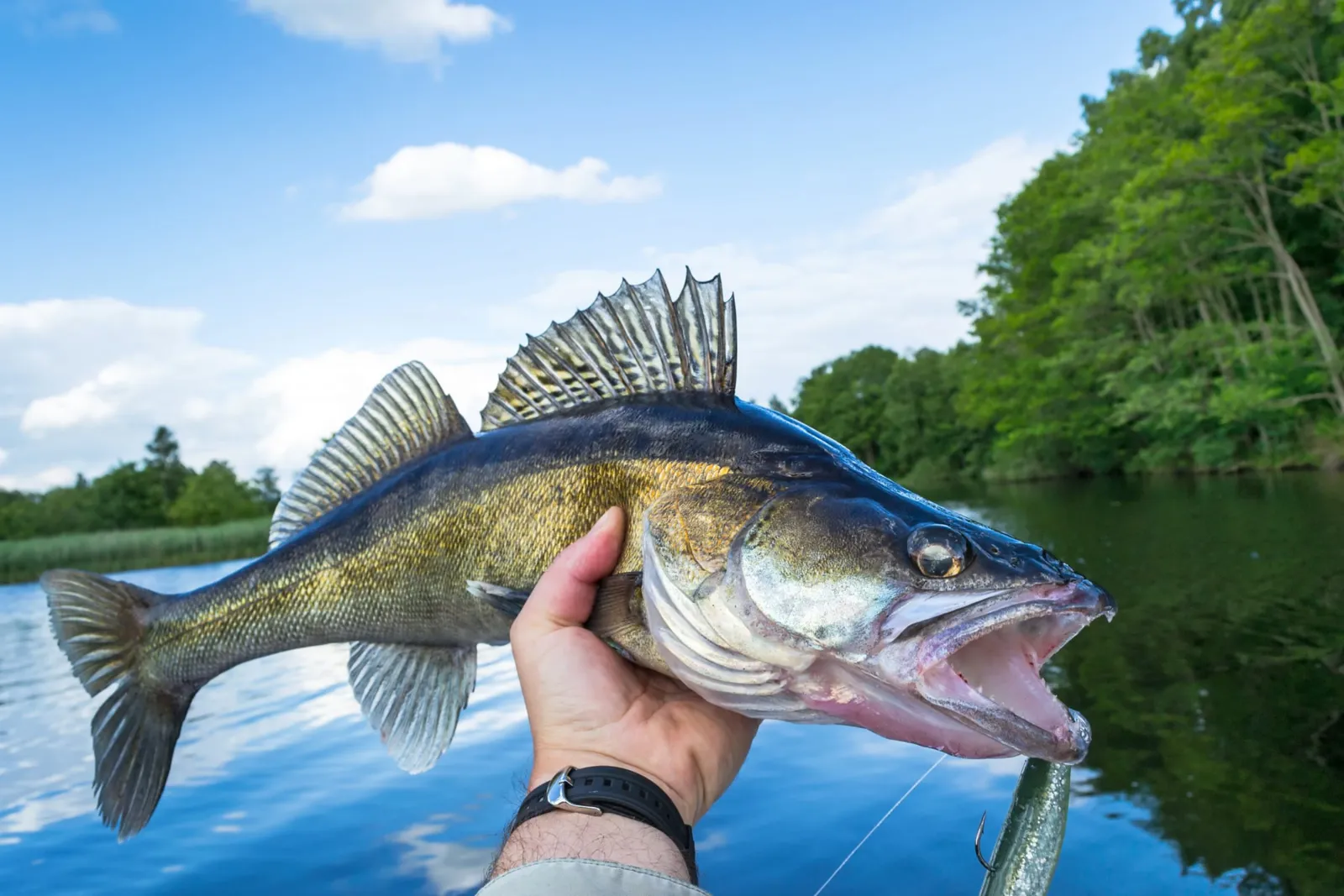
Walleye have a reputation as a challenging fish, and a lot of that reputation is about timing. They are among the best-tasting freshwater fish and a favorite target across the northern US and Canada, but they don't bite like bass do. They feed best in low light, hold in specific spots, and often bite so softly you barely feel it.
Once you understand those three things, walleye become much easier to catch. This guide covers the gear to start with, the simplest techniques, and where to look from shore or a boat.
Some links on this page are affiliate links. If you buy through them, we may earn a commission at no extra cost to you. See our affiliate disclosure.
Know the Fish First
Walleye have large, light-sensitive eyes that help them see in dim conditions. That one fact explains most of their behavior:
- They feed in low light. Dawn, dusk, night, and cloudy or choppy days are prime. Bright midday sun usually sends them deeper or into shade.
- They relate to structure. Look for points, rock reefs, humps, drop-offs, weed edges, and current breaks. Open featureless water rarely holds them.
- They hug the bottom. Many of your presentations should be near the bottom, within a foot or two.
- They eat baitfish. Minnows, shiners, perch, and shad are staples, so lures and baits that imitate them work best.
Wind matters too. A light to moderate wind creating a "walleye chop" on the surface dims the light under the water and can turn on a midday bite.
The Beginner Gear List
Rod and reel
A 6'6" to 7'6" medium or medium-light spinning rod with a fast action is the standard walleye tool. It's sensitive enough to feel light bites and has enough backbone to set the hook and handle a fish up to several pounds. Pair it with a 2000 to 3000 size spinning reel.
For a deeper dive, see best rod and reel for walleye.
Line
- Braided line, 8-10 lb, is popular because it's thin, strong, and very sensitive, which helps you feel those faint bites.
- Add a fluorocarbon leader of 6-10 lb (about 3 to 6 feet), since walleye can be line-shy and fluorocarbon is hard to see.
- Monofilament or fluorocarbon in 6-10 lb is a fine alternative for beginners.
Jigs
A jig head with a minnow or soft plastic body is the most versatile walleye presentation. Start with 1/8, 1/4, and 3/8 oz jig heads. Use the lightest weight that lets you feel the bottom.
Live-bait rigging gear
A Lindy rig (also called a live bait rig) uses a sliding sinker so a walleye can take the bait without feeling resistance. It's one of the oldest and most reliable walleye setups. A slip bobber is another proven tool for suspended or shallow fish.
A crankbait or two
A minnow-style crankbait is great for casting along rocky shorelines, especially at night.
Small items that matter
- Headlamp with a red-light mode. Night fishing is common for walleye, and red light protects your night vision.
- A rubber-mesh net, which is gentler on fish and helps with landing.
- A lip grip and pliers. Walleye have sharp teeth and gill plates, so handle them carefully.
Four Easy Techniques to Start
1. Jig and minnow
Tip a jig head with a live minnow (or a soft plastic if live bait isn't allowed or available). Cast out, let it sink to the bottom, then lift the rod tip a foot or so and let it fall back. Most bites come as the jig falls or when you feel a faint "tick" or extra weight.
2. The Lindy rig
Thread a sliding sinker onto your line, add a swivel, a leader of about 3 to 6 feet, and a hook with a nightcrawler, leech, or minnow. Cast it out, let it settle on the bottom, and drag it slowly or let it sit. When a walleye picks it up, free-spool slightly or hold the line loosely for a moment before setting the hook.
3. Casting crankbaits
At dawn, dusk, and night, cast a minnow-style crankbait parallel to rocky shorelines and reel slowly with occasional pauses. This is an easy technique for shore anglers.
4. Slip bobber
For fish holding at a specific depth, set a slip bobber to suspend a jig or live bait at that level. Watch for the bobber to go down.
Where to Catch Walleye From Shore
Walleye fishing from the bank can be excellent if you focus on the right places and times.
- Rocky points and shorelines next to deeper water, especially at night in spring and fall.
- Jetties, breakwalls, and harbor piers, which hold baitfish and give access to deeper water.
- River current breaks: the edges of fast current, eddies behind rocks, and the deep holes below them.
- Below dams and spillways, which concentrate fish and bait. Pay close attention to posted safety signs and restrictions, since currents and water releases here can be dangerous.
- Fish low-light windows. Arrive before sunset and stay into the first hours of darkness, or fish at dawn.
- Check local rules. Some areas restrict night fishing or access, so confirm before you go.
Where to Catch Walleye From a Boat
A boat opens up structure that shore anglers can't reach.
- Humps and rock reefs in lakes and reservoirs.
- Drop-offs and weed edges, where walleye move up to feed.
- Points and channel edges.
- Use electronics. A fish finder helps you find structure, baitfish, and walleye themselves.
- Slow down. Drifting slowly or using a trolling motor to hold a precise speed and depth is key.
- Troll to cover water. Trolling crankbaits or crawler harnesses is a classic way to find walleye on big water.
- Anchor or hold over productive spots once you find fish.
How to Set the Hook and Land a Walleye
Walleye bites can be subtle, like a tap or a sense of weight.
- Keep a tight line so you can feel bites.
- When you feel something, reel down to take up slack, then sweep the rod up firmly.
- Don't jerk wildly. Walleye have soft mouths, and a steady sweep keeps the hook in.
- Keep the rod up and let the drag handle runs. Walleye often make short, headshaking fights and a few runs near the boat.
- Net the fish and handle carefully. Wet your hands and support the fish if you're releasing it.
Common Beginner Mistakes
- Fishing at the wrong time. Midday sun and calm water are often the slowest.
- Fishing empty water. Find structure first.
- Using jigs that are too heavy. A lighter jig keeps the bait in the strike zone and feels more natural.
- Missing bites. If you feel a tap, set the hook rather than waiting.
- Moving too fast. Slow presentations near the bottom catch more walleye.
- Ignoring safety near dams and in the dark. Wear a life jacket on boats and bring a light.
Rules and Respect
Walleye regulations vary a lot, with seasons, size limits, slot limits, and bag limits that differ by lake, river, and state or province. Check your local wildlife agency before fishing, and note any special rules for night fishing or particular waters. Many anglers keep a few walleye to eat and release larger breeding fish, which helps keep fisheries healthy.
Quick Starter Checklist
- 6'6"-7'6" medium or medium-light fast spinning combo
- 8-10 lb braid with a fluorocarbon leader (or 6-10 lb mono or fluoro)
- Jig heads in 1/8, 1/4, and 3/8 oz
- Soft plastics and/or live bait (where allowed)
- A Lindy rig and a slip bobber
- A minnow-style crankbait
- Headlamp, net, lip grip, and pliers
- A valid fishing license
FAQ
What's the best time to catch walleye? Dawn, dusk, and night, plus cloudy or windy days.
Can I catch walleye from shore? Yes. Rocky points, harbors, jetties, and river banks are productive, especially at night.
What's the best bait for beginners? A jig tipped with a minnow is a reliable starting point. Nightcrawlers and leeches on a Lindy rig are also classic.
Are walleye hard to catch? They can be, mostly because of timing and location. Fishing the right spot in low light makes a big difference.
Next up: Fall Walleye Fishing, when walleye feed heavily and move into reach of shore anglers.