
Best Baits and Lures for Largemouth Bass (And When to Use Each)
Stop guessing at the tackle shop. These are the best baits and lures for largemouth bass, when to use each, and how to fish them from shore or a boat.
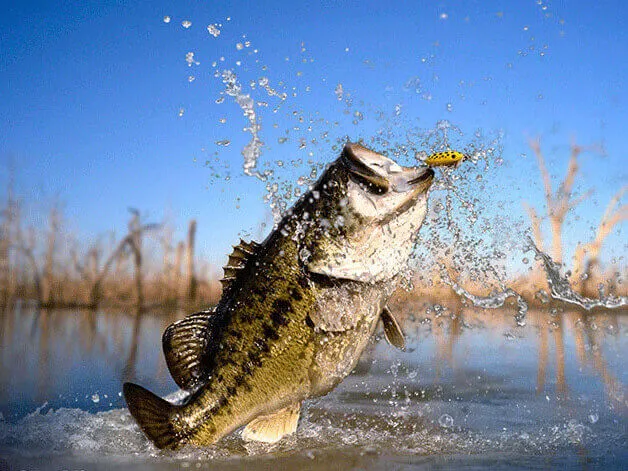
Walk into a tackle shop and you'll see a wall of lures in every shape and color. Most beginners buy too many and use too few. The truth is that a small, well-chosen set covers nearly every situation, and the skill is knowing when to use each one.
This guide groups the best largemouth bass baits by type, explains when each works, and notes how to fish them from shore or a boat.
Some links on this page are affiliate links. If you buy through them, we may earn a commission at no extra cost to you. See our affiliate disclosure.
How to Choose a Lure
Ask three questions:
- Where are the fish? Heavy weeds and wood call for weedless baits. Open water allows treble-hook lures.
- How active are they? Active fish chase fast baits. Sluggish fish need slow, subtle ones.
- What are they eating? Match the main food: baitfish, crawfish, or frogs.
Water clarity matters too. In clear water, use natural colors (green pumpkin, shad, watermelon). In stained or muddy water, use brighter or darker colors (chartreuse, black and blue, white) that are easier to see.
Soft Plastics (The Beginner's Best Friend)
Texas-rigged worm
The classic bass bait. A plastic worm on an offset hook with a bullet weight slides through weeds and wood. It works year-round and catches fish when nothing else will.
- When: Any season. Especially good in heavy cover and for slow fish.
- How: Cast, let it sink, hop it slowly along the bottom.
- Shore or boat: Both.
Wacky-rigged stick bait
A thick, straight stick bait hooked in the middle falls with a shimmy that bass can't resist, especially around docks and calm water.
- When: Spring through fall, in clear to lightly stained water.
- How: Cast, let it fall on a slack line, and twitch gently.
- Shore or boat: Both.
Paddle-tail swimbait
A soft swimbait with a paddle tail imitates a baitfish and can be fished at any depth.
- When: When bass are feeding on baitfish, especially in fall.
- How: Reel steadily at various depths.
- Shore or boat: Both.
Jigs
Finesse or football jig
A jig with a trailer imitates a crawfish, one of the largest food sources for bass. It's excellent in cover and on hard bottoms.
- When: Cooler water and heavy cover, as well as through summer around docks and wood.
- How: Drag or hop it across the bottom.
- Shore or boat: Both, though a stronger rod helps.
Moving Baits (Cover Water Fast)
Spinnerbait
Easy to use and hard to snag. A spinnerbait flashes and vibrates like a baitfish.
- When: Spring and fall, in stained water, or when bass are active.
- How: Cast and reel steadily, varying speed.
- Shore or boat: Both.
Bladed jig
A hybrid of a jig and a spinnerbait, it vibrates strongly and works around weeds.
- When: Cooler months and over weed tops.
- How: Reel steadily and rip it free of weeds.
- Shore or boat: Both.
Squarebill crankbait
A shallow-diving crankbait that bounces off cover and triggers reaction strikes.
- When: Spring and fall, around wood and rock in shallow water.
- How: Reel steadily and deflect off cover.
- Shore or boat: Both.
Lipless crankbait
Casts far and works at many depths, making it excellent for covering big areas.
- When: Spring and fall, over weed tops and flats.
- How: Reel steadily or yo-yo it, ripping it through weeds.
- Shore or boat: Both. Particularly good from shore because it casts so far.
Jerkbait
A slim, suspending lure that darts and pauses like an injured baitfish.
- When: Cooler water, in clear conditions.
- How: Twitch twice, then pause. Bass often hit during the pause.
- Shore or boat: Both.
Topwater (The Fun One)
Hollow-body frog
A weedless frog that glides over mats and thick vegetation where little else can go.
- When: Summer, early and late in the day, over weeds.
- How: Walk or pop it over weeds and pause at openings.
- Shore or boat: Both.
Popper or walking bait
These make noise and disturbance on the surface to draw strikes in open water.
- When: Calm mornings and evenings, and low-light days.
- How: Pop or walk the bait, pausing between actions.
- Shore or boat: Both.
Tip for topwater: when a bass hits, wait until you feel the weight of the fish before setting the hook.
A Beginner Starter Kit of Six
If you want to keep it simple, start with these:
- Texas-rigged worm (green pumpkin or watermelon)
- Wacky stick bait (natural colors)
- Spinnerbait (white or chartreuse)
- Squarebill crankbait (shad or crawfish pattern)
- Hollow-body frog (black or green)
- Paddle-tail swimbait (shad or white)
Add a jig and a jerkbait as you gain experience.
Match the Lure to the Season
| Season | Strong choices |
|---|---|
| Spring | Spinnerbait, lipless crankbait, wacky stick bait, Texas rig |
| Summer | Texas rig, frog, topwater early and late, jig |
| Fall | Spinnerbait, squarebill, jerkbait, swimbait |
| Winter | Slow jig, Texas rig, jerkbait on warmer days |
Color Quick Guide
- Clear water: Natural colors like green pumpkin, watermelon, and shad.
- Stained water: Chartreuse, white, and brighter accents.
- Muddy water: Dark colors (black and blue) or high-contrast patterns.
- Bright sun: Natural, translucent colors.
- Overcast: Brighter or darker colors for visibility.
Tackle Tips
- Keep lures organized by type in a tackle box.
- Sharpen or replace hooks regularly, since dull hooks lose fish.
- Retie your knot after catching a big fish or after any snag, since line weakens at the knot.
- Use the right line and rod for the lure. For help, see best rod and reel for largemouth bass.
FAQ
What's the single best bait for beginners? A Texas-rigged plastic worm. It's easy to use, catches fish in many conditions, and rarely snags.
How many lures do I need? Six types, as listed above, is enough to start.
Do I need live bait? No. Artificial lures are enough for bass, and they're easier to carry. Check local rules if you plan to use live bait.
Related: Largemouth Bass Fishing for Beginners and Fall Largemouth Bass Fishing.